



As Artificial Intelligence (AI) becomes integral to business and society, the need for ethical and responsible deployment has never been more critical. AI systems have the potential to drive innovation, improve decision-making, and optimize efficiency—but without proper guidelines, they can also introduce bias, erode trust, and create unintended harm.
Why AI Ethics Matter
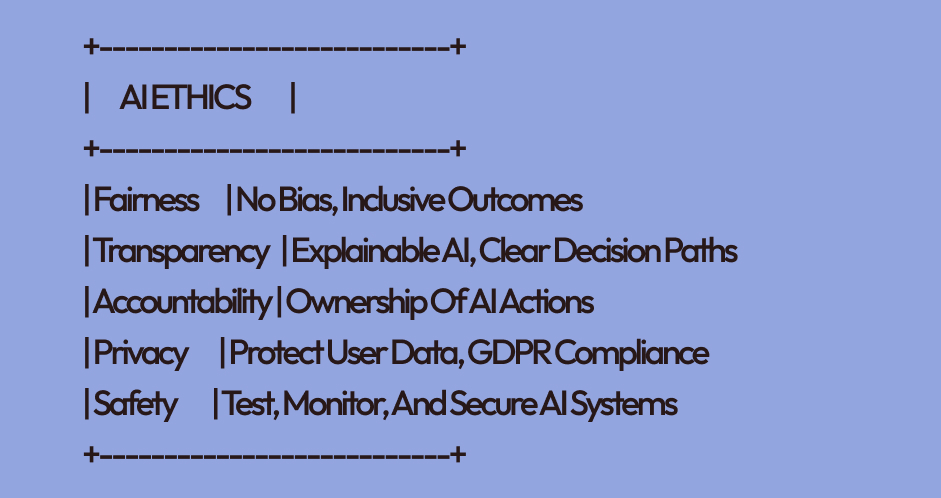
AI ethics is about ensuring AI systems are aligned with human values and societal norms. Ethical AI considers fairness, transparency, accountability, and privacy from the ground up. Companies that adopt ethical AI not only reduce risks but also build trust with customers, employees, and regulators.
Key Principles for Responsible AI Deployment
- Fairness – Ensure AI decisions are unbiased across demographics and do not perpetuate discrimination.
- Transparency – Provide clear explanations for AI decisions, so users understand how and why outcomes are produced.
- Accountability – Assign responsibility for AI-driven decisions within the organization.
- Privacy – Safeguard personal data and comply with relevant regulations, like GDPR.
Safety and Security – Implement robust testing to prevent errors, misuse, or harmful outcomes.
Implementing Responsible AI in Practice
- Bias Audits: Regularly test AI models for biased predictions or outcomes.
- Explainable Models: Use techniques like interpretable models or AI output dashboards.
- Stakeholder Engagement: Involve diverse teams and external experts to assess ethical impact.
- Ethical Policies: Develop organizational guidelines that define acceptable AI use cases.
Continuous Monitoring: AI is not “set and forget.” Track its impact, adapt, and refine models over time.
The Business Case
Ethical AI is not just compliance—it’s a competitive advantage. Companies that prioritize responsible AI:
- Gain customer trust and loyalty
- Avoid regulatory fines and legal issues
- Promote a positive brand image
- Encourage innovation that aligns with societal values
Conclusion
Deploying AI responsibly requires more than technical skill—it demands a mindset of ethics, accountability, and foresight. By adhering to clear guidelines and embedding ethics into AI workflows, organizations can harness the full power of AI while minimizing risks.